abandon
ye who
enter here
Totentanz
“All hope abandon ye who enter here.”
- Art Direction:
Yoann Minet
- Typeface design:
Yoann Minet
- Design date:
2015
- Published by:
Bureau Brut
- Initial release:
2017
- Current version:
7.1
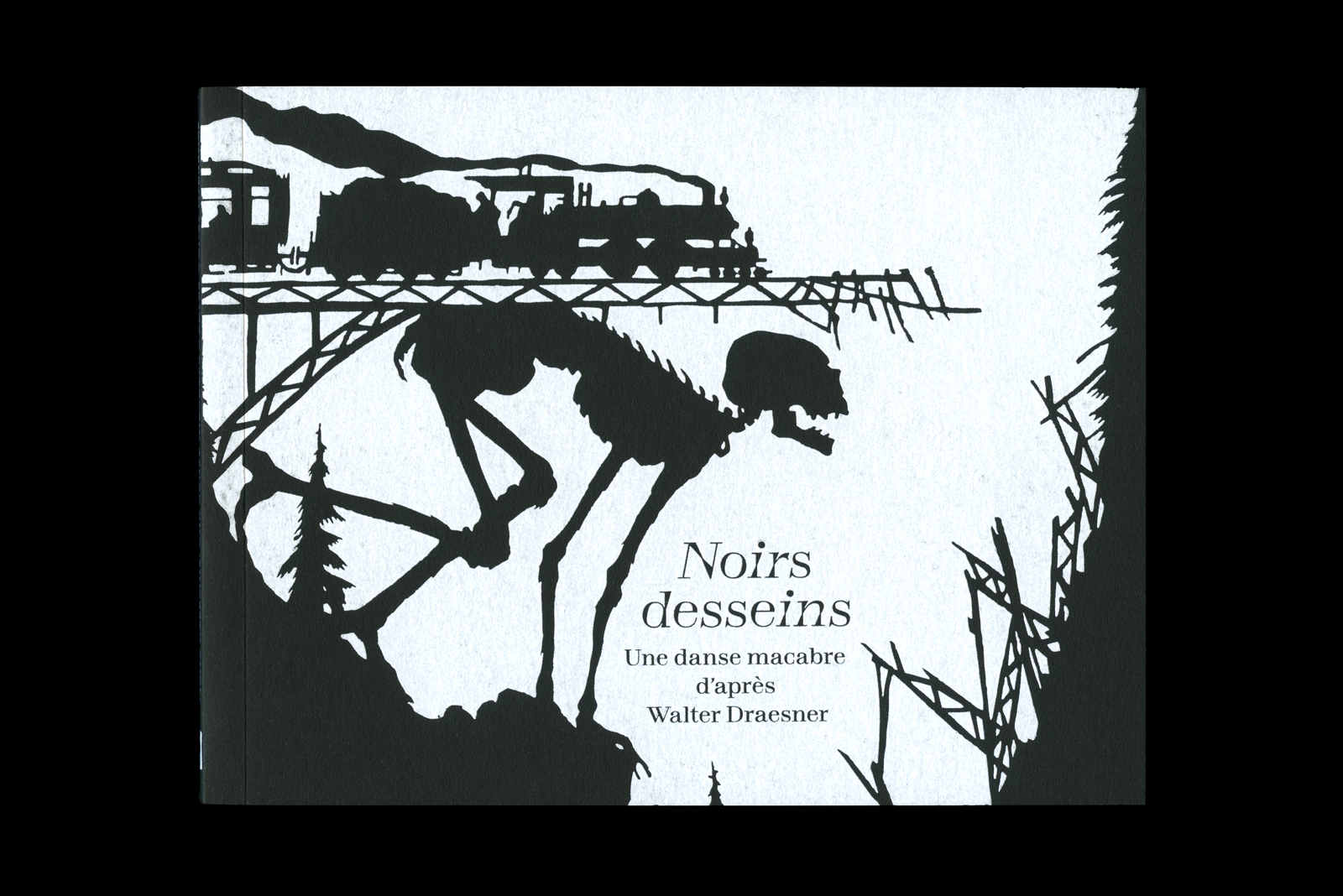
The Death Dance (Totentanz in German) is an artistic motif that appeared at the end of the Middle Ages. It represents a procession, often in duos, where the Death takes people from all social conditions (from the Pope to peasant). The message is simple: no one escapes from Death. And what duo is more emblematic than roman and italic in typography?
We invented a new italic that steps away from classical genres: unconventional, un-calligraphic, only new.
Death to italics!
Death to calligraphy!
Death to the hand gesture!
The italic is not cursive nor slanted: it is a deformed, tortured, monstrous version of it. It might be a mirror of Death itself. By contorting the body of the letters and by breaking the ductus a new way of thinking about the slanted character was born. This was possible thanks to a technique consisting of crossing and sliding strokes.
On the practical side, the Slanted style is very distinct from the Roman. If Totentanz twists the conventions, why wouldn’t its italic twist its letters the other way? The Backslanted version completes the family that way.
Totentanz doesn’t follow one historic model in its style. It comes up from the bottom of the catacombs, looms over the depths of the cemeteries and is reborn in the 19th century inscriptions.
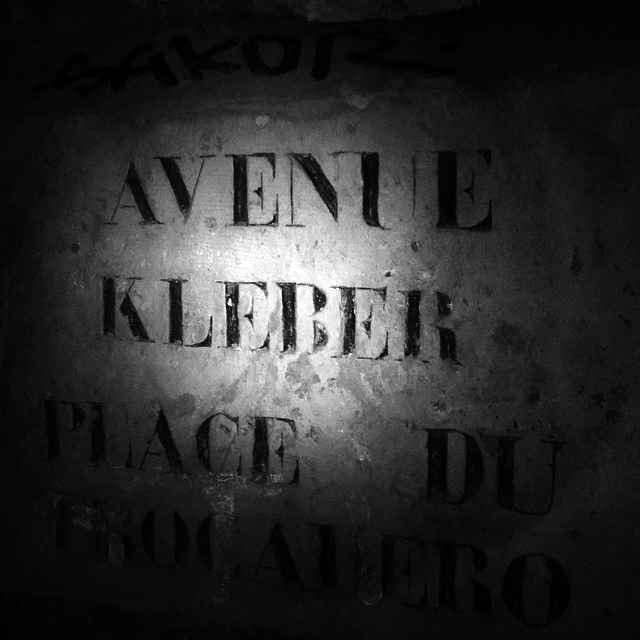
The Didones1 acted as the starting point for the creation of Totentanz. This very elegant and contrasted style, associated with glossy paper from fashion magazines like Harper’s Bazaar. We precisely wanted to run away from that stereotyped imagery. Our reference was not the shiny covers’ Didones, but the lapidary engravings we could find on tombstones and stencils used in Paris’ catacombs. 2
That way, Totentanz is not as contrasted as the genre canons. It is sturdier, more adapted to running text composition, in small sizes. Its slanted pairs, with their never seen before shapes, create a surprising effect in bigger sizes, bringing a graphic dimension to your creations. The crossed strokes and their median junction will make your texts shine and vibrate, even in small size.
- Didone is a term extracted from the Vox-ATypI classification: it showcases linear serifs, a strong contrast and a straight axis. Despite its limits (as all classifications have limits), we use it here as a practical and shared landmark.
Family overview
Type tester
OpenType features
Character set
🡢 Share your project